Serving Sandy Springs
Storm Damage Inspection in Sandy Springs
Call us for a free storm damage inspection estimate
Serving Sandy Springs
Call us for a free storm damage inspection estimate
A storm damage inspection starts with the storm path, not the shingle color. Contractors look at the date, hail size reports, roof age, tree cover, and which slopes faced the wind during the event.
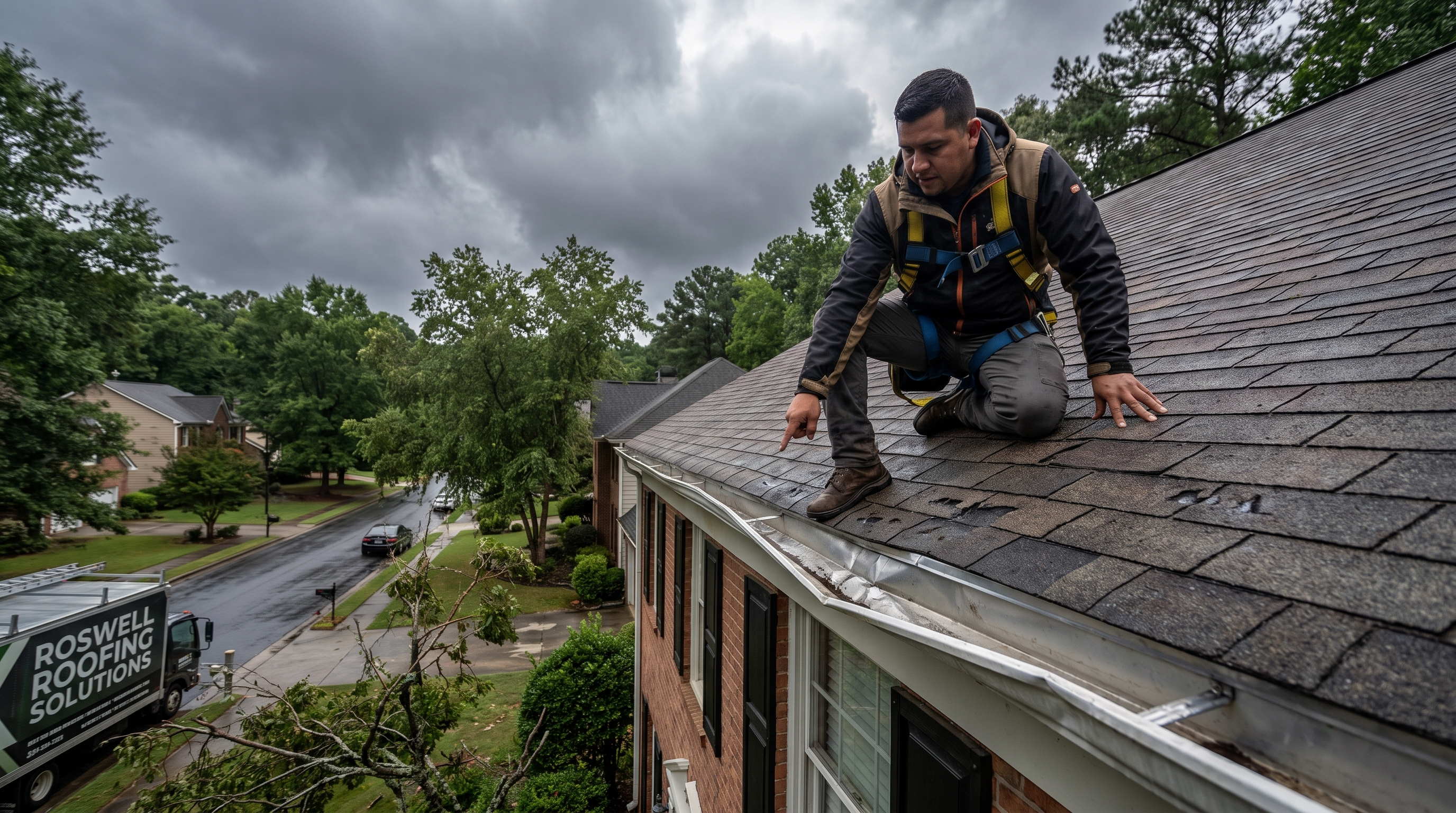
On Roswell homes, the steepest sections can hide bruised shingles from ground view. Inspectors check shingles by hand, photograph granule displacement, test soft metals for dents, and look for damage around vents, pipe boots, ridge caps, skylights, and gutters.
The inspection also separates storm damage from wear. Old blistering, nail pops, cracked sealant, and heat aging can sit beside fresh hail hits, and the claim file needs to make that difference clear.
A good inspection ends with a plain recommendation: no claim, repair, temporary protection, or replacement documentation. No guessing.
Sandy Springs homes near wooded streets and Chattahoochee-side slopes can be difficult to inspect from the ground. Mature trees may soften some hail impact while branches, debris, and wind can create roof problems in the same storm.
The housing mix includes older roofs, renovations, and large custom homes with valleys, skylights, and complex flashing. A hail inspection should check shingles and the metal accessories that often reveal storm direction.
For Sandy Springs homeowners, emergency tarping may matter when water reaches the attic before the claim is settled. The sooner the damage is documented, the easier it is to separate storm impact from prior wear.
You get roof facts before you speak with the carrier. That makes the claim decision calmer and more informed.
Tall rooflines, steep driveways, and mature trees are common around Roswell. The inspection accounts for access and safety before repair or replacement is discussed.
Most storm inspections can be scheduled fast after major hail.
Free — no obligations